
Analysis of economic conditions in counties and districts of Tangshan City
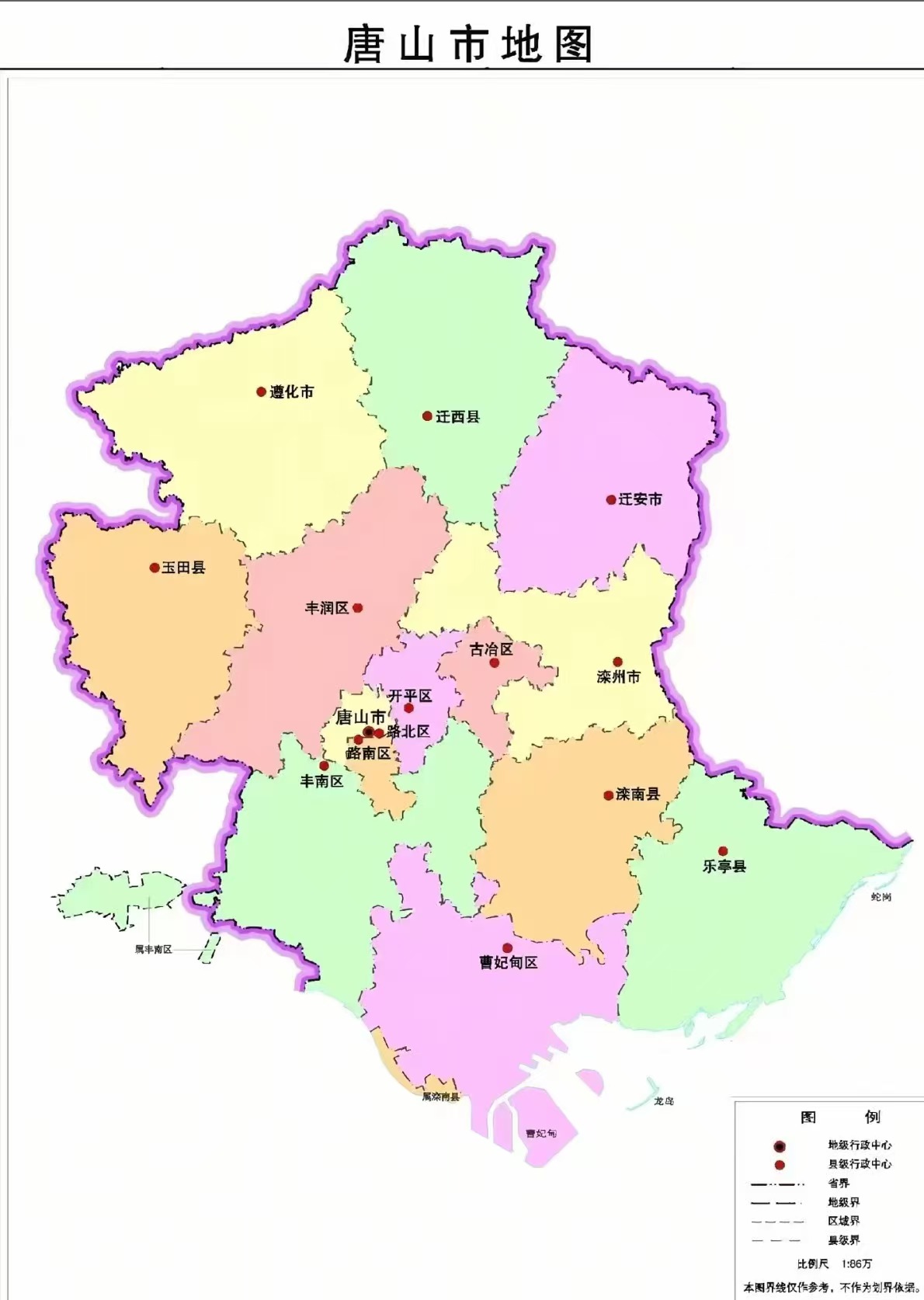
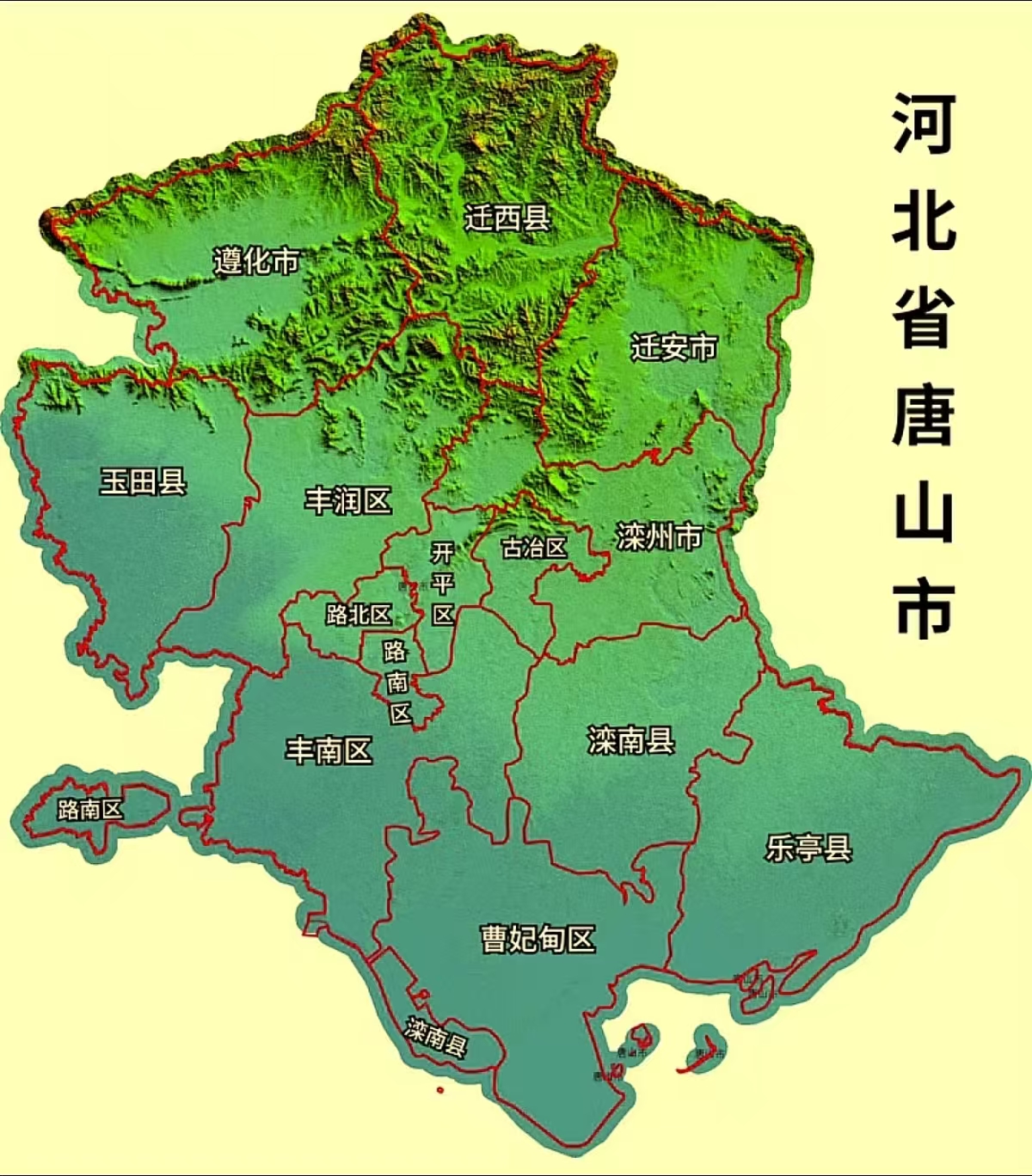
Tangshan, abbreviated as "Tang", is a prefecture-level city under the jurisdiction of Hebei Province. Located in the northeastern part of the North China Plain, it borders the Bohai Sea to the south, the Yanshan Mountains to the north, and is adjacent to Beijing and Tianjin. It is situated in the heart of the Northeast Asian Economic Zone. Tangshan is a resource-based city that thrived on coal and rose on the strength of steel. It is known as the "cradle of modern industry in China" and is now an important pole in the world-class urban agglomeration of Beijing-Tianjin-Hebei and the central city of Hebei Province. Tangshan Port is an important comprehensive port in the Bohai Rim region, with cargo throughput ranking among the top in the world. In recent years, Tangshan has unswervingly promoted the transformation of old and new growth drivers, accelerated the construction of three pillars of "new industry, large port, and high technology", built a modern industrial system, and strived to achieve a transformation from a resource-based industrial and mining city to an innovative ecological city.
1. Lubei District
Introduction: Lubei District is the central urban area of Tangshan City, where the municipal party committee and government are located. It serves as the political, economic, cultural, financial, and commercial center of the city. Covering an area of 176 square kilometers, it has a permanent resident population of approximately 900,000. Lubei District is a core area with a high concentration of modern service industries. It boasts well-developed urban functions and a strong commercial atmosphere, featuring multiple city-level business districts and financial clusters.
Main economic indicators for 2020-2024 (estimated and some actual):
* Gross Domestic Product (GDP): Approximately 75 billion yuan in 2020, surpassing 90 billion yuan in 2023, and expected to reach the level of a hundred-billion-yuan city in 2024, with an average annual growth rate maintained within a reasonable range.
* General public budget revenue: It consistently ranks among the top in the city, with approximately 5 billion yuan achieved in 2023, and is expected to maintain steady growth in 2024.
* Fixed assets investment: Mainly focusing on investments in modern service industries and urban renewal projects, with an average annual investment exceeding 10 billion yuan.
* Total retail sales of consumer goods: accounting for a relatively high proportion of the city's total, accounting for over 20% of the city's total in 2023, and expected to steadily increase in 2024 with the recovery of consumption.
Import and export data:
* As a central urban area, it is not a traditional strong area for foreign trade, with relatively small import and export volumes. However, the potential of service trade (such as finance, consulting, education, etc.) is huge. Specific data is usually included in municipal-level statistics.
Pillar industries:
1. Modern financial industry: A hub for regional headquarters of financial institutions, with over a hundred institutions in banking, insurance, securities, funds, and other fields. The added value of the financial industry accounts for a high proportion of GDP.
2. High-end commerce and trade industry: With multiple large-scale urban complexes and core business districts such as Wanda Plaza, Aegean, Ocean City, and Wuyue Plaza, it serves as a consumption center radiating to the eastern Hebei region.
3. Software and information service industry: It has gathered a group of software development, information technology services, and digital economy enterprises, and is the core area for Tangshan to develop the digital economy.
4. Cultural and creative industry: Leveraging cultural facilities such as grand theaters, art galleries, and museums, we aim to develop industries like convention and exhibition economy, creative design, performing arts, and entertainment.
Characteristic industrial belt/agglomeration area:
* Financial Center Industrial Cluster: With Jianshe Road and Beixin Road as its core, it gathers the vast majority of municipal-level financial institution headquarters.
* Phoenix New City Modern Business District: Prioritize the development of headquarters economy, business offices, technology research and development, high-end residential areas, etc.
* High-end commercial and trade belt along Zhanqian Road: It is arranged around Tangshan Station, forming a commercial cluster of transportation hub type.
2. Lunan District
Introduction: Lunan District, the old urban area and birthplace of Tangshan City, boasts a long history and profound cultural heritage. In recent years, Lunan District has vigorously promoted urban renewal and industrial transformation and upgrading, focusing on the development of modern service industries, urban industries, and cultural tourism. The Chengnan Economic Development Zone serves as an important industrial growth pole.
Main economic indicators for 2020-2024 (estimated and some actual):
* Gross Domestic Product (GDP): Approximately 35 billion yuan in 2020, surpassing 45 billion yuan in 2023, and expected to maintain steady growth in 2024.
* General public budget revenue: Steady growth, with approximately 2.5 billion yuan achieved in 2023.
* Fixed assets investment: Urban renewal and park construction projects drive sustained investment growth.
* Total retail sales of consumer goods: Affected by the commercial foundation of the old urban area and the cultivation of new business districts, the growth rate is stable.
Import and export data:
* The volume of foreign trade is relatively small, mainly consisting of exports from productive enterprises within the region, such as equipment parts and components, ceramics, etc.
Pillar industries:
1. Modern trade and logistics industry: It boasts traditional wholesale markets such as Hehuakeng and Jinshi, and is undergoing transformation and upgrading towards modernization and intelligence. The Chengnan Economic Development Zone focuses on the development of modern logistics and e-commerce.
2. Smart Manufacturing and Emergency Equipment Industry: Develop urban-type industries such as intelligent measurement and control, emergency equipment manufacturing, etc. in the Chengnan Economic Development Zone.
3. Cultural tourism: Leveraging industrial and historical cultural heritage sites such as the Kailuan National Mine Park, Tangshan Nanhu·Kailuan Tourist Scenic Area (part), and the former site of Tangshan Jiaotong University Campus, we aim to develop industrial tourism and urban leisure tourism.
4. Building economy and headquarters economy: Attracting regional headquarters and functional institutions of enterprises to settle in.
Characteristic industrial belt/cluster area:
* Chengnan Economic Development Zone: Prioritize the development of industries such as modern logistics, high-end equipment manufacturing, new materials, and electronic information.
* Cultural and tourism industry belt around Nanhu Lake: Leveraging the ecological resources of Nanhu Lake, we will develop industries such as cultural creativity, tourism and leisure, and high-end exhibitions.
* Old Jiaotong University-Railway Station Area: Through urban renewal, create a distinctive street area featuring the integrated development of culture, commerce, and tourism.
3. Guye District
Introduction: Guye District is a typical resource-based urban area in Tangshan, established as a district due to its mineral resources and boasting a coal mining history spanning over a century. Facing the challenge of resource depletion, Guye District has unswervingly promoted transformation and upgrading, cultivated successor industries, and strived to solve the problem of "mineral depletion leading to urban decline", embarking on a path of green and low-carbon transformation and development.
Main economic indicators for 2020-2024 (estimated and some actual):
* Gross Domestic Product (GDP): The economic aggregate is in a period of transformation and adjustment. It was approximately 20 billion yuan in 2020 and 23 billion yuan in 2023. It is expected to grow at a low rate or remain flat in 2024, with structural optimization being the key.
* General public budget revenue: It is significantly influenced by traditional industries, with a relatively stable revenue scale.
* Fixed assets investment: The focus is on projects related to industrial transformation, infrastructure, and ecological governance.
* Value-added of industrial enterprises above a certain size: The proportion of traditional industries such as coal chemical and steel has declined, while emerging industries such as new energy and new materials have seen rapid growth but from a small base.
Import and export data:
* The total import and export volume is not large, with the main export products being coke, fine chemical products, metal products, etc.
Pillar industries:
1. High-quality steel and coking deep processing: Promote the downstream extension of traditional steel and coking industries, and develop high-end metal products and new chemical materials.
2. New building materials industry: Utilize industrial solid waste such as coal gangue and fly ash to develop circular economy, and produce new wall materials, cement, etc.
3. New energy industry: We will develop the production, storage, and transportation of hydrogen energy, as well as the manufacturing of related equipment. We will also utilize coal mining subsidence areas to develop photovoltaic power generation.
4. Modern logistics industry: Leverage the advantages of transportation location to build a regional logistics hub.
Characteristic industrial belt/agglomeration area:
* Economic Development Zone (New Energy and New Material Industrial Park): Focus on developing industries such as hydrogen energy, lithium battery materials, and new chemical materials.
* Circular economy industrial park: Focusing on the resource utilization of industrial solid waste and the production of new building materials.
4. Kaiping District
Introduction: Kaiping District, one of the central urban areas of Tangshan City, boasts a long history and is the birthplace of the "Kailuan Coal Mine". With its prominent location and transportation advantages, it lies in the "Golden Triangle" region of Beijing, Tianjin, and Tangshan. Kaiping District is striving to build a development pattern driven by "dual cores" (the main urban area and Kaiping High-tech Zone) to promote the integration of industry and city.
Key economic indicators for 2020-2024 (forecast and partial actual data):
* Gross Domestic Product (GDP): Approximately 30 billion yuan in 2020, approximately 38 billion yuan in 2023, and expected to exceed 40 billion yuan in 2024, with a growth rate higher than the city average.
* General public budget revenue: approximately 2 billion yuan in 2023, maintaining steady growth.
* Fixed assets investment: High-tech zone construction and urban development are the main investment drivers.
* Value-added of industrial enterprises above designated size: The growth rate is relatively fast, with the leading industries playing a significant supporting role.
Import and export data:
* Import and export activities are brisk, with the total import and export volume expected to exceed RMB 3 billion in 2023, primarily consisting of equipment manufacturing and hardware product exports.
Pillar industries:
1. High-end equipment manufacturing industry: It is the largest pillar industry in the region, encompassing intelligent rail transit equipment, automotive parts, construction machinery, industrial robots, and more.
2. Modern commerce and logistics industry: It boasts large-scale agricultural product wholesale markets, hardware and building materials markets, etc., with a well-developed logistics network.
3. New material industry: Develop special metal materials, electronic information materials, etc.
4. Emergency equipment industry: As an important component of Tangshan Emergency Equipment Industrial Park, it focuses on the development of monitoring and early warning equipment, as well as emergency rescue equipment.
Characteristic industrial belt/cluster area:
* Kaiping High-tech Industrial Development Zone: A core development platform, focusing on the layout of industrial clusters such as high-end equipment manufacturing, new materials, and emergency equipment.
* Tangshan Flower Sea: An ecological park transformed from a coal mining subsidence area, with surrounding areas being planned for the development of cultural tourism, health care, and other industries.
5. Fengnan District
Introduction: Located north of the main urban area and south of the Bohai Sea, Fengnan District is one of the economically strong districts in Tangshan. With a solid industrial foundation, it serves as a significant steel production base, equipment manufacturing base, and ceramic export base nationwide. It boasts the Fengnan Port Area of Tangshan Port, with a vast hinterland. In recent years, Fengnan has witnessed rapid development in steel deep processing and coastal economy.
Main economic indicators for 2020-2024 (forecast and partial actual data):
* Gross Domestic Product (GDP): surpassed 80 billion yuan in 2020, broke through the 100 billion yuan mark in 2023, and is expected to continue growing in 2024, firmly ranking in the first tier of the city.
* General public budget revenue: exceeding 5 billion yuan in 2023, demonstrating substantial financial strength.
* Fixed assets investment: With a huge scale, the construction of coastal industrial zones and port-adjacent business districts are hot investment spots.
* Added value of industrial enterprises above designated size: The total amount has long ranked among the top in the city.
Import and export data:
* In the foreign trade region, the total import and export volume is expected to exceed RMB 15 billion in 2023. The main export products include steel, ceramics, machinery and equipment, etc.; while imports primarily consist of raw materials such as iron ore and coal.
Pillar industries:
1. High-quality steel and deep processing: With leading steel enterprises nationwide, our products cover plates, strips, shapes, wires, tubes, etc. We are vigorously developing high value-added steel products and downstream products.
2. High-end equipment manufacturing: Developing marine engineering equipment, rail transit equipment, special robots, etc.
3. Chemical industry: Leverage coastal advantages to develop modern and fine chemical industries.
4. Modern ceramic industry: An important production and export base for sanitary ceramics and daily-use ceramics in China.
5. Port-vicinity economy: Relying on the Fengnan Port Area, develop industries such as warehousing and logistics, bulk commodity trading, and export processing.
Characteristic industrial belt/cluster area:
* Fengnan Economic Development Zone (Lingang Economic Park, Xiaoji Industrial Zone, Qianying Industrial Zone): A core industrial platform, home to deep processing of steel, equipment manufacturing, and chemical industry clusters.
* Coastal industrial zone: an important space for future development, undertaking major industrial projects.
* Ceramic industry concentrated areas: clusters of ceramic enterprises in Huanggezhuang, Qianying, and other places.
6. Fengrun District
Introduction: Fengrun District, the most populous and largest municipal district in Tangshan City, is renowned as the "Cradle of China's Rail Transit Equipment Manufacturing Industry" and the "Northern Steel Base". With advantageous geographical and transportation conditions, it is traversed by the Beijing-Harbin Expressway and railway. The district boasts distinct industrial characteristics, having established a robust industrial system primarily focused on rail transit and steel building materials.
Main economic indicators for 2020-2024 (estimated and some actual):
* Gross Domestic Product (GDP): Exceeded 90 billion yuan in 2020, is expected to reach around 110 billion yuan in 2023, and is expected to grow steadily in 2024, with the economic aggregate keeping pace with Fengnan.
* General public budget revenue: exceeding 4 billion yuan in 2023.
* Fixed assets investment: It continues to operate at a high level, with a focus on manufacturing and infrastructure.
* Value-added of industrial enterprises above designated size: high proportion in GDP, with significant driving effect from leading industries.
Import and export data:
* An important area for foreign trade, with the total import and export volume expected to exceed RMB 10 billion in 2023. Mainly exports components of bullet trains, steel sections, construction machinery, etc.
Pillar industries:
1. Rail transit equipment industry: Led by CRRC Tangshan, it has formed a full industrial chain industrial cluster integrating research and development, manufacturing, maintenance, and service, and is a national-level industrial cluster.
2. Structural steel building materials industry: The largest structural steel production base in the country, offering a full range of products including H-beams, angle steels, and channel steels, with a significant market share nationwide.
3. Equipment manufacturing industry: Develop construction machinery, metallurgical equipment, printing machinery, etc.
4. Modern logistics industry: Leveraging its status as a transportation hub, it has established multiple large-scale logistics parks.
Characteristic industrial belt/cluster area:
* Tangshan Fengrun Economic Development Zone (High-Speed Train City): A national-level development zone and a world-class agglomeration area for the rail transit industry.
* Profile steel industry cluster: A large number of profile steel production enterprises, such as leading enterprises like Tianzhu, Zhengfeng, and Jinxi, are distributed along National Highway 112.
* China (Fengrun) Agricultural Products Logistics Park: an important agricultural products distribution center in North China.
7. Caofeidian District
Introduction: Caofeidian District is a coastal economic growth pole and the core area for the "One Port, Two Cities" strategy, which is vigorously developed by Tangshan City and even Hebei Province. With the natural port advantage of the deep trough of Bohai Bay, the Caofeidian Port Area of Tangshan Port serves as the main hub port for energy and raw materials and a comprehensive trade port for serving national major strategies. It has formed industrial clusters such as port logistics, steel and chemical industry, equipment manufacturing, and comprehensive bonded areas.
Main economic indicators for 2020-2024 (forecast and partial actual data):
* Gross Domestic Product (GDP): Approximately 55 billion yuan in 2020, expected to surpass 100 billion yuan in 2023, leading the city in growth rate, and will continue to grow rapidly in 2024, becoming the primary growth pole of Tangshan's economy.
* General public budget revenue: experiencing rapid growth, with an estimated revenue exceeding 7 billion yuan in 2023.
* Fixed assets investment: It has consistently ranked first in the city for a long time, with major projects continuously being implemented.
* Added value of industrial enterprises above designated size: The growth rate is extremely fast, contributing to the majority of the city's industrial growth.
Import and export data:
* It is the absolute mainstay of the city's foreign trade, with the total import and export volume in 2023 expected to account for over 70% of the city's total, exceeding RMB 100 billion. The import and export of bulk commodities (crude oil, iron ore, coal, LNG, grain, etc.) constitute the main component.
Pillar industries:
1. Port logistics and bulk commodity trade: core advantageous industries, with multiple specialized terminals and trading centers for ores, coal, crude oil, LNG, timber, grain, and more.
2. High-quality steel industry: It gathers large modern steel enterprises such as Shougang Jingtang and Wenfeng Special Steel, producing high-end products.
3. Modern chemical industry: Leveraging crude oil terminals and integrated refining and chemical projects, we aim to develop the industrial chains of petrochemicals, coal chemicals, and salt chemicals.
4. High-end equipment manufacturing: Develop marine engineering equipment, heavy equipment, new energy vehicles, and their components.
5. Comprehensive Bonded Zone and Cross-border E-commerce: Caofeidian Comprehensive Bonded Zone is a policy highland for the development of bonded logistics, processing, and service trade.
Characteristic industrial belt/cluster area:
* Caofeidian Industrial Zone: A core industrial base, focusing on heavy and chemical industries such as steel, chemical engineering, and equipment manufacturing.
* Caofeidian New City: A functional supporting area for the city, developing higher education, technological innovation, business finance, etc.
* Comprehensive Bonded Zone: An open platform for foreign trade, where new business forms such as cross-border e-commerce and bonded maintenance are clustered.
* Nanpu Economic Development Zone: Base for salt chemical and chemical fiber industries.
8. Luanzhou City
Introduction: Luanzhou City, established from the former Luan County, boasts a long history and splendid culture, and is one of the birthplaces of eastern Hebei culture. It is surrounded by the five major cities of Beijing, Tianjin, Tangshan, Chengde, and Qinhuangdao, with a well-developed transportation network. The city's industries are mainly focused on equipment manufacturing, food processing, fine chemicals, and cultural tourism, making it an important node city in northern Tangshan.
Key economic indicators for 2020-2024 (forecast and partial actuals):
* Gross Domestic Product (GDP): Approximately 43 billion yuan in 2020, approximately 50 billion yuan in 2023, with a projected steady growth in 2024.
* General public budget revenue: approximately 2.5 billion yuan in 2023.
* Fixed assets investment: Stable growth, with a significant proportion of industrial investment.
* Total retail sales of consumer goods: steady growth.
Import and export data:
* The total import and export volume in 2023 is expected to be approximately 2 billion yuan. The main export products include peanut food, equipment parts, chemical products, etc.
Pillar industries:
1. Equipment manufacturing industry: Developing automotive parts, rail transit components, mining machinery, etc.
2. Food processing industry: Known as the "Hometown of Peanuts in China", the region boasts a well-developed full industrial chain encompassing peanut planting, processing, and trade, along with other industries such as livestock and poultry processing.
3. Fine chemical industry: mainly focusing on deep processing of coal tar and pharmaceutical intermediates.
4. Cultural tourism industry: With attractions such as the ancient city of Luanzhou and the Wenfeng Tower in Yanshan, the trend of integrating culture and tourism is evident.
Characteristic industrial belt/cluster area:
* Economic development zone: The main gathering area for equipment manufacturing and chemical enterprises.
* Luanzhou Ancient City Cultural and Tourism Industrial Zone: A national AAAA scenic spot, driving consumption in catering, accommodation, and shopping.
* Leizhuang-Xiaomazhuang peanut processing and trading belt: an important peanut distribution and processing base in the country.
9. Luannan County
Introduction: Located south of the Bohai Sea, Luannan County is a traditional agricultural and populous county, and also an important livestock and poultry breeding and processing base in North China. In recent years, Luannan has vigorously developed characteristic industrial clusters such as steel shovels and gloves, and actively promoted the development of coastal port-vicinity industries relying on the Zuidong Economic Development Zone.
Main economic indicators for 2020-2024 (forecast and partial actual):
* Gross Domestic Product (GDP): Approximately 35 billion yuan in 2020, approximately 40 billion yuan in 2023, with a projected moderate growth in 2024.
* General public budget revenue: approximately 2 billion yuan in 2023.
* Fixed assets investment: The construction of the Zuidong Park drives investment growth.
* Total retail sales of consumer goods: The total volume is relatively large.
Import and export data:
* The total import and export volume in 2023 is expected to be approximately 1.5 billion yuan, mainly involving the export of steel shovels, gloves, livestock and poultry products, etc.
Pillar industry:
1. Livestock and poultry breeding and processing industry: "Hometown of Broiler Chicken in China", boasting a complete industrial chain spanning from breeding, feed production, and farming to slaughtering and deep processing.
2. Special equipment manufacturing (shovels, gloves): As the "Hometown of Shovels in China" and "Hometown of Gloves in China", it has formed a highly distinctive export-oriented industrial cluster.
3. Port-vicinity industries: The Zuidong Economic Development Zone focuses on developing industries such as equipment manufacturing, modern logistics, and new energy.
4. Paper packaging industry: It boasts large-scale paper-making and packaging enterprises.
Characteristic industrial belt/cluster area:
* Zuidong Economic Development Zone: The main battlefield for coastal development, undertaking industrial transfer and major projects.
* Songdaokou Steel Shovel Industrial Park: The largest steel shovel production and export base in China, with a market share of over 80% nationwide.
* Pazi Port Livestock and Poultry Processing Park: A cluster of livestock and poultry slaughtering and processing enterprises.
10. Leting County
Introduction: Leting County, the hometown of Li Dazhao, one of the main founders of the Communist Party of China (CPC), is located in the southeast of Tangshan City and is the largest coastal county in Hebei Province. It boasts the Jingtang Port area of Tangshan Port and has a vast hinterland. Leting is an important agricultural production base in the Beijing-Tianjin-Hebei region and an integral part of the coastal economic belt of Tangshan. It is vigorously developing industrial clusters such as high-quality steel, chemical industry, and port logistics.
Main economic indicators for 2020-2024 (forecast and partial actual data):
* Gross Domestic Product (GDP): Approximately 45 billion yuan in 2020, expected to surpass 60 billion yuan in 2023, with a growth rate ranking among the top in the city, and expected to continue to grow rapidly in 2024.
* General public budget revenue: exceeded 3 billion yuan in 2023, with rapid growth.
* Fixed assets investment: Driven by major projects such as the Hebei Iron and Steel Leting Base, the investment amount is huge.
* Added value of industrial enterprises above designated size: rapid growth.
Import and export data:
* A major foreign trade county, with a total import and export volume expected to exceed RMB 20 billion in 2023. Main exports include steel products and agricultural products; imports are mainly iron ore and coal.
Pillar industries:
1. High-quality steel industry: With the Hebei Iron & Steel Leting Steel Base as the leading enterprise, we will build a green and intelligent modern steel base.
2. Fine chemical industry: Leverage ports and hinterlands to develop new chemical materials.
3. Port logistics industry: Provide strong hinterland support and logistics services for Jingtang Port Area.
4. Modern Agriculture: Known as the "Hometown of Fresh Peaches in China" and "Hometown of Vegetables in Hebei", it boasts developed facility agriculture and large-scale breeding industries.
Characteristic industrial belt/cluster area:
* Leting Economic Development Zone (Coastal Industrial Park): A core industrial platform, primarily serving as a location for steel and chemical projects.
* Urban industrial clusters: Develop industries such as equipment manufacturing and agricultural product processing.
* Jidong International Agricultural Products Logistics Park: a regional agricultural products trading center.
11. Qian'an City
Introduction: Qian'an City, the strongest county-level city in Hebei Province, is renowned nationwide as the "City of Steel," with its comprehensive economic strength consistently ranking among the top 100 counties in China. Rich in mineral resources, it boasts substantial iron ore reserves. In recent years, Qian'an has been steadfast in extending the steel industry chain, cultivating emerging industries, and developing the urban economy, making it a national model city for new urbanization construction in county towns.
Main economic indicators for 2020-2024 (estimated and some actual):
* Gross Domestic Product (GDP): The GDP surpassed 100 billion yuan in 2020, and is expected to exceed 120 billion yuan in 2023. It is expected to grow steadily in 2024, and the economic aggregate has been leading among county-level units in Hebei Province for many years.
* General public budget revenue: exceeding 6 billion yuan in 2023, demonstrating substantial financial strength.
* Fixed assets investment: The structure continues to be optimized, with an increased proportion of investment in industrial chain extension projects and technological transformation.
* Total retail sales of consumer goods: The growth rate is relatively fast, and the level of urban consumption continues to improve.
Import and export data:
* An important foreign trade region, with a total import and export volume expected to exceed RMB 10 billion in 2023. Main exports include steel products, paper products, and biomedical products; main imports are iron ore.
Pillar industries:
1. High-quality steel industry: With large enterprises such as Shougang Qiansteel and Jiujiang Wire Rod, it is fully developing steel-consuming industries and deep processing of steel products, moving towards the end of the industrial chain and the high end of the value chain.
2. Equipment manufacturing industry: Develop metallurgical equipment, construction machinery, packaging machinery, etc.
3. Modern logistics industry: Relying on the railway and highway network, build regional logistics centers.
4. Biomedical industry: A burgeoning industry that is being nurtured and expanded, primarily focusing on active pharmaceutical ingredients and traditional Chinese medicine.
5. Cultural tourism industry: Leverage natural landscape resources to develop comprehensive tourism.
Characteristic industrial belt/cluster area:
* Qian'an Economic Development Zone (High-tech Industrial Development Zone): A core development platform, focusing on the layout of industries such as deep processing of steel, equipment manufacturing, and biomedicine.
* Northern Steel Logistics Industry Cluster: Large steel trading market and logistics base.
* Luanhe Cultural Tourism Industrial Zone: An urban functional area integrating ecology, culture, and tourism.
12. Qianxi County
Introduction: Qianxi County, located in the northern part of Tangshan City and on the southern foothills of the Yanshan Mountains, is a purely mountainous county. With excellent ecology, it is recognized as one of the "National Top 100 Deep Breathing Towns" and is known as the "Hometown of Chinese Chestnuts". Once dominated by the mining economy, it has now shifted towards green development, striving to build itself into the back garden of Beijing-Tianjin-Hebei region and a national-level all-for-one tourism demonstration area.
Main economic indicators from 2020 to 2024 (estimated and some actual):
* Gross Domestic Product (GDP): Approximately 35 billion yuan in 2020, approximately 40 billion yuan in 2023, with a projected steady growth in 2024, as the effects of economic structural transformation become evident.
* General public budget revenue: approximately 2 billion yuan in 2023.
* Fixed assets investment: The proportion of investment in cultural tourism and new energy projects has increased.
* Total retail sales of consumer goods: significantly driven by the tourism industry.
Import and export data:
* The total import and export volume in 2023 is expected to be approximately 1 billion yuan. The main exports include chestnut products, iron concentrate powder, tungsten products, etc.
Pillar industries:
1. Green Steel and Vanadium-Titanium New Materials: Promote the intensive and green development of iron ore mining and steel smelting, and leverage the advantages of vanadium and titanium resources to develop the new materials industry.
2. Chestnut industry: Integrating planting, storage, processing, sales, and tourism, "Qianxi Chestnut" is a national geographical indication protected product.
3. Cultural tourism and health care industry: With scenic spots such as Jingzhong Mountain, Qingshanguan, and Fenghuang Mountain, as well as water resources like Panjiakou and Daheiting Reservoir (Lixiang Lake), the development of ecological tourism, rural tourism, and Great Wall cultural tourism is booming.
4. New energy industry: Develop clean energy sources such as photovoltaic and wind power.
Characteristic industrial belt/cluster area:
* Jinxi Steel Industrial Park: Production base for green steel and vanadium-titanium new materials.
* Chestnut Modern Agricultural Industrial Park: Demonstration area for standardized chestnut planting, deep processing, and technological research and development.
* Great Wall Cultural Tourism Belt: A distinctive cultural and tourism route developed along the remains of the Ming Dynasty Great Wall.
13. Yutian County
Introduction: Yutian County is located at the westernmost tip of Tangshan City, situated in the heart of the Beijing-Tianjin-Hebei triangle, boasting a unique geographical advantage. With a solid agricultural foundation, it is known as the "Hometown of Chinese Cabbage" and the birthplace of "China Time-honored Brands" (such as Wangzhihe Fermented Bean Curd). The county features distinctive industrial characteristics, having formed industrial clusters in printing and packaging machinery, pipe manufacturing, food processing, and other industries.
Key economic indicators for 2020-2024 (forecast and partial actual data):
* Gross Domestic Product (GDP): Approximately 40 billion yuan in 2020, approximately 47 billion yuan in 2023, with steady growth expected in 2024.
* General public budget revenue: approximately 1.8 billion yuan in 2023.
* Fixed assets investment: Investment in industrial technological transformation and emerging industry projects is active.
* Total retail sales of consumer goods: steady growth.
Import and export data:
* The total import and export volume in 2023 is expected to be approximately 2.5 billion yuan, mainly including printing machinery, food, plastic products, etc.
Pillar industries:
1. Printing and packaging machinery industry: Known as the "Hometown of Printing Machinery in China", it has formed a complete industrial chain from single machines to complete sets of equipment, with a high market share nationwide.
2. Pipe manufacturing industry: Develop new types of plastic pipes, cast iron pipes, etc., with a large industrial scale.
3. Food processing and traditional Chinese medicine industry: With production bases of time-honored brands such as Tongrentang and Wangzhihe, we develop traditional Chinese medicine preparations, health food, and deep processing of agricultural products.
4. Renewable resource recycling industry: National-level urban mineral demonstration base, with a well-established system for recycling, processing, and utilization of waste steel and plastics.
Characteristic industrial belt/cluster area:
* Yutian Economic Development Zone (Houhu Industrial Park): a major hub for printing machinery and pipe manufacturing enterprises.
* Agricultural product processing park: A cluster of food processing and traditional Chinese medicine enterprises.
* Yahongqiao Market: A large-scale small commodity wholesale market with a long history, radiating across North China and Northeast China.
14. Zunhua City
Introduction: Zunhua City, a county-level city under the administration of Tangshan, is located in the northern part of the city. It is renowned as the "Hometown of Chinese Chestnuts" and "Hometown of Chinese Mushrooms". With a long history, it boasts world cultural heritage sites such as the Qing East Tomb and the ancient Great Wall, among other famous scenic spots. The industry is mainly focused on equipment manufacturing, food processing, and deep processing of steel, making it an important tourist destination and base for special agricultural products in Tangshan.
Main economic indicators for 2020-2024 (estimated and some actual):
* Gross Domestic Product (GDP): Approximately 43 billion yuan in 2020, approximately 50 billion yuan in 2023, with a projected steady growth in 2024.
* General public budget revenue: approximately 2.2 billion yuan in 2023.
* Fixed assets investment: The investment in cultural and tourism integration and infrastructure projects accounts for a large proportion.
* Total retail sales of consumer goods: significantly influenced by tourism.
Import and export data:
* The total import and export volume in 2023 is expected to be approximately 1.5 billion RMB. The main exports include equipment parts, agricultural products (chestnuts, canned food), etc.
Pillar industries:
1. Cultural tourism industry: One of the core industries, with the Qing Eastern Tombs as the core IP, driving the development of all-for-one tourism.
2. Equipment manufacturing industry: Develop mining machinery, auto parts, etc.
3. Food processing industry: The deep processing industry for agricultural products such as chestnuts, mushrooms, canned fruits, and broiler chickens is well-developed.
4. Deep processing of steel: Promote local steel enterprises to extend downstream into components, structural parts, and other related products.
Characteristic industrial belt/cluster area:
* Qingdongling-Tangquan Cultural and Tourism Integration Demonstration Zone: A core tourist attraction and surrounding area for health and wellness resort projects.
* Economic development zone: The main location for equipment manufacturing and food processing enterprises.
* Malanyu·Tangquan Health and Wellness Industrial Belt: Leveraging hot springs and historical and cultural resources to develop health and wellness vacation industries.
* Ping'an City Edible Fungi Industrial Belt: An important edible fungi production base in North China.
summary
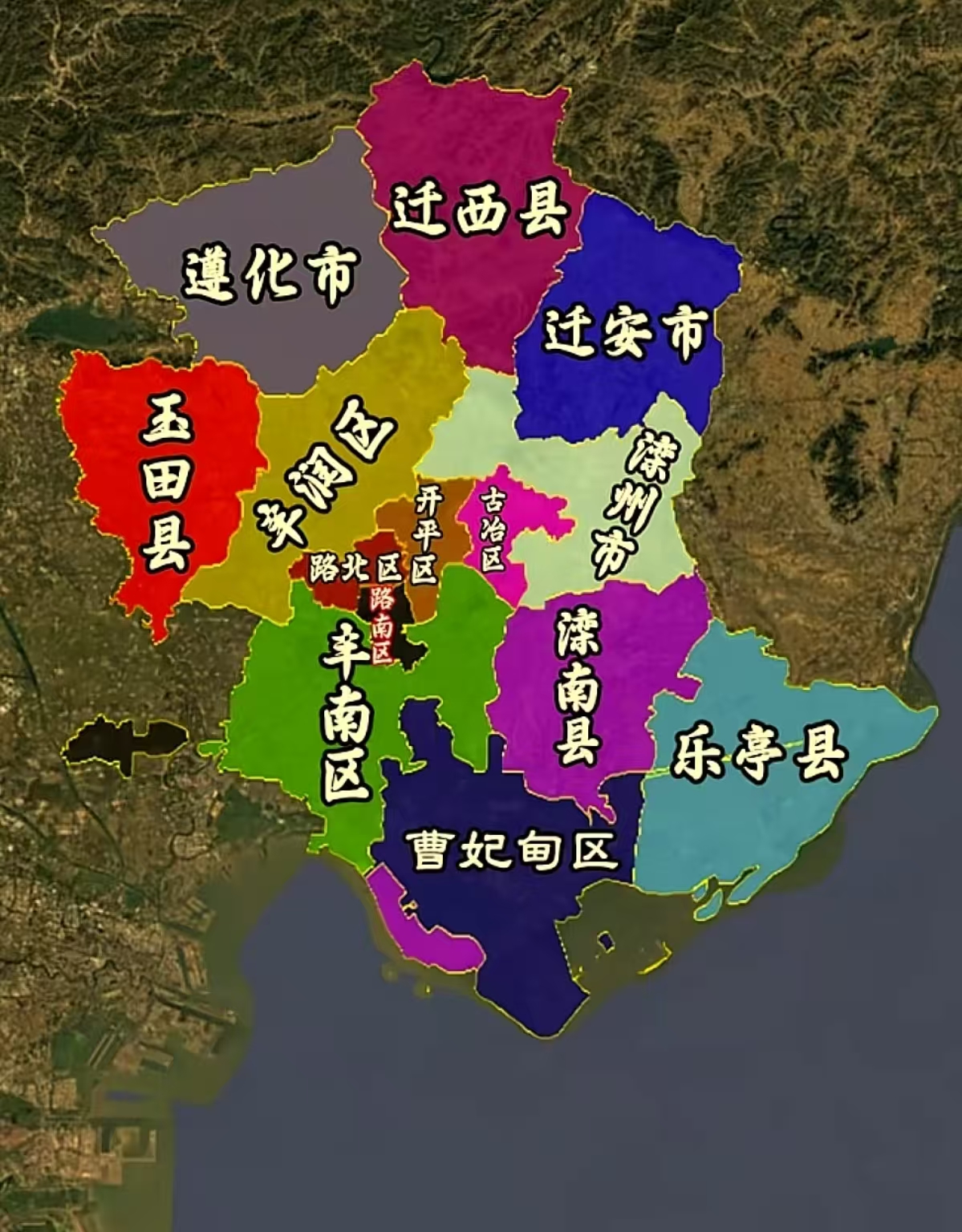
Based on their unique resource endowments and geographical conditions, various districts and counties in Tangshan have established distinctive industrial systems and development paths. Overall:
* Coastal areas (Caofeidian, Leting, Fengnan, and parts of Luannan): Relying on Dagang, these areas focus on developing port-vicinity industries, heavy chemical industries, and bulk logistics, serving as the core engine for Tangshan's future economic growth.
* Central cities (Lubei, Lunan, Kaiping, Fengrun): Focusing on urban economy, developing modern service industries, high-end manufacturing, and urban industries is the key to enhancing the city's energy level and quality.
* Northern mountainous areas (Qian'an, Qianxi, Zunhua): Based on traditional industries such as steel, they should transition towards green and high-quality development, vigorously promote cultural tourism, health care, and specialty agriculture, and explore an ecological-first development model.
* Counties in central and western regions (Luanzhou, Yutian): Based on characteristic industrial clusters (equipment, food, building materials, etc.), actively integrate into the Beijing-Tianjin industrial chain, and achieve dislocation development and transformation and upgrading.
In the future, Tangshan will continue to deepen the coordinated development of Beijing-Tianjin-Hebei, accelerate the pace of "three efforts to build" (building itself into a window city for economic cooperation in Northeast Asia, a new industrialization base in the Bohai Rim region, and an important fulcrum in the capital economic circle), promote complementary and coordinated development among districts and counties, and build a diversely supported modern industrial system.